
Blossom Color: Floral Serenity
Fancy Games StudioBoard
4.81.48K Reviews
- Version
- 1.71.193
- Installs
- 1.00M
- Age Rating
- Teen
Screenshots
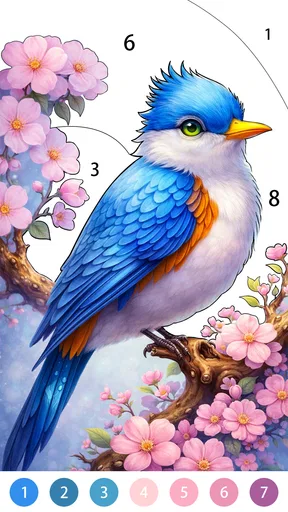



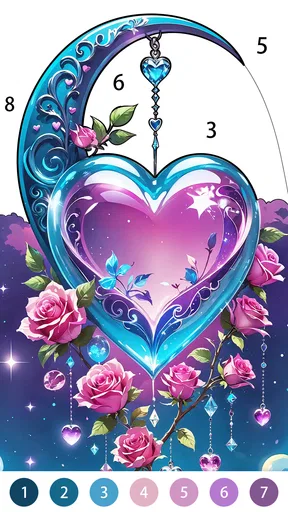



Our Review of Blossom Color: Floral Serenity
 Analysis by Appyee
Blossom Color: Floral Serenity is a free board game from Fancy Games Studio that I found easy to approach when I wanted something calm rather than competitive. Its idea is simple: you begin a colorful journey toward a more relaxed state of mind, with blossom-inspired visual presentation and short puzzle sessions that suit small breaks. The Teen content rating is worth noticing for families, although the game’s gentle presentation makes it feel less intense than many other titles carrying that label.
After spending time with it, my main impression is that this is best understood as a casual, visually focused game for players who enjoy arranging colors and working through a board at their own pace. It does not try to replace a deep strategy game, and it is not the right pick if you need a story-heavy adventure or a fast multiplayer challenge. What it does well is create a low-pressure routine: open the game, look at the board, make a few deliberate choices, and stop when the session feels complete.
What to expect before your first move
The first thing I noticed is how strongly the game depends on visual recognition. The flowers and colors are not just decoration; they are the reason the board remains pleasant to study while you decide what to do next. That makes the experience more inviting than a plain grid of symbols, but it also means that screen brightness, display size, and your own ability to distinguish similar shades can affect how comfortable a session feels.
As a board game, it sits closer to a relaxing color puzzle than to traditional tabletop games such as chess, checkers, or a full card battler. You are not learning a large rulebook before you can play. The appeal comes from seeing a board gradually become more orderly and attractive, then using that visual feedback to guide the next decision. I think that makes it particularly approachable for someone who normally avoids games with complicated controls.
The store summary describes a journey toward blossoming serenity, and that mood is a fair description of the presentation. Still, I would not install it expecting a completely passive screensaver. You need to pay attention, compare colors, and think about the consequences of a move. The calm atmosphere reduces pressure, but it does not remove the need to make choices.
It is also useful to set expectations about progression. The satisfying part is not a dramatic plot twist or a competitive ranking; it is the repeated feeling of bringing visual order to a puzzle. If you enjoy small goals and gradual improvement, that loop can be surprisingly absorbing. If you need constant novelty, character development, or action, the slower rhythm may feel limited after the first few sessions.
With an average rating of 4.8 from around 9.5 thousand ratings, the game has clearly connected with a substantial group of players. More than 1 million installs also suggest that it has found an audience beyond a tiny niche. I would treat those figures as a sign of broad appeal, not as proof that every player will enjoy the same pace or visual style.
Who will get the most from it
I would recommend it first to people who like color-based puzzles, decorative boards, and games that can be played without committing to a long sitting. It works well for a quiet morning, a short break between tasks, or the moment when you want to use your phone without being pulled into a stressful competition.
It can also suit players who are returning to mobile games after a long break. The central idea is easier to understand than the systems in many strategy titles, and the floral theme gives the board a softer personality. A first-time user does not need to know genre terminology or memorize complex combinations to begin making progress.
I would be more cautious about recommending it to someone who wants a social game. This is not the experience I would choose for playing directly against friends, discussing tactics in real time, or building a collection of characters. A conventional board-game app with multiplayer rules would be a better fit for that purpose.
Getting started without feeling lost
Installation is straightforward because the game is free to download and supports devices running Android 7.0 or later. On a compatible phone or tablet, I would begin with one simple goal: do not try to understand every possible outcome immediately. Let the opening board teach you what the colors and blossoms are asking you to notice.
My advice is to play the first session somewhere with decent lighting and a clean screen. That sounds obvious, but this game relies on visual differences, and fingerprints or a dim display can make similar shades harder to compare. If you use a small phone, holding it at a comfortable distance matters more here than it would in a text-heavy game because the board is the main source of information.
Take the opening moments slowly. Instead of tapping quickly because a move looks available, pause and scan the whole board first. Look for the clearest color relationship and consider whether acting on it will make the remaining spaces easier or harder to read. This habit is more useful than trying to guess a perfect strategy from the beginning.
One practical detail I appreciated is that calm presentation can make players underestimate the value of planning. The game feels gentle, but a hurried tap can still leave you with a less convenient arrangement. I found that treating each move as a small piece of housekeeping worked better than treating it like a race. The board became easier to read when I focused on reducing clutter rather than chasing speed.
Because the game includes in-app purchases ranging from $1.99 to $59.99 per item, I would also make a deliberate choice before spending anything. A free download is useful for testing whether the visual style and puzzle rhythm suit you, so there is no reason to rush into optional purchases during the first session. I recommend playing long enough to understand whether the basic loop itself is enjoyable.
That approach answers one question many new users have: can I try it without paying? Yes, the game is free, and you can use the initial experience to decide whether it deserves a place on your phone. The presence of purchases means that a completely cost-free long-term experience should not be assumed, but it does not prevent a cautious first look.
Your first meaningful success
For me, the first meaningful success was not simply completing a move. It was recognizing a pattern before touching the board, choosing an action with a clear purpose, and then seeing the arrangement become more coherent. That moment gives the game its strongest hook: the satisfaction comes from understanding why a move helped, not merely from watching an effect happen.
To reach that point, I suggest using a three-step routine. First, identify the colors that are easiest to separate visually. Second, choose the move that creates the most readable space rather than the one that looks most immediately attractive. Third, stop for a second after the board changes and reassess from the beginning. This prevents you from following an outdated plan after the arrangement has shifted.
A useful beginner mistake is to focus on one attractive blossom while ignoring the rest of the board. I did this early on, and it made later choices feel less obvious. The better approach is to keep a broad view. A beautiful local match may not be the best overall move if it leaves several similar colors crowded together.
Another small technique is to use the end of a session as a review rather than immediately starting again. Ask yourself which move made the board easier to understand and which move created confusion. This turns a few minutes of play into a learning loop. You begin to notice whether you prefer clearing space early, preserving a flexible area, or working from the most distinct colors first.
This is where the game can become more than a decorative time filler. The board encourages visual patience, and that translates well to short, interrupted sessions. If a delivery arrives or you need to answer a message, you can return with a clearer plan when you have trained yourself to scan before acting.
Common points of confusion
The most likely source of confusion is assuming that every colorful element should be handled immediately. In a floral board, the prettiest or brightest object naturally attracts attention, but visual prominence does not always mean strategic priority. I had better results when I asked which part of the board was restricting my next choices, then worked there first.
Similar shades can also slow down new players. If two colors look nearly identical on your display, do not rely only on quick glances. Move your phone slightly, increase the surrounding light, and inspect the neighboring spaces before deciding. This is not a trick that changes the rules; it simply makes the visual information easier to process.
Some users may wonder whether the game is suitable for children. Its Teen rating means I would not treat it as an automatically child-directed title, even though the floral design feels friendly. For a younger player, I would check the device’s purchase controls and play a little first so I could judge the experience personally rather than relying on the artwork alone.
Another question is whether the game needs a powerful modern phone. The listed minimum operating system is Android 7.0, which makes it accessible to many older Android devices. Compatibility is not the same as identical comfort, though. A larger screen may make color comparisons easier, while an older or smaller device could make the board feel cramped. I would test it on the device you actually plan to use instead of assuming that the minimum requirement guarantees the best experience.
Players also often ask whether this kind of game becomes repetitive. My honest answer is that repetition is part of its identity. The pleasure comes from refining how you read and arrange the board, so the loop can remain enjoyable if you like gradual mastery. It will feel repetitive if you need a new mechanic, a narrative reveal, or a different competitive goal every few minutes.
Making the next sessions more satisfying
Once the opening moves feel familiar, I recommend changing your objective from “finish quickly” to “make the next position easier to read.” That single adjustment improved my sessions more than trying to play faster. A readable board gives you more confidence, reduces accidental choices, and makes the floral design work as a helpful visual guide rather than a source of distraction.
You can also divide play into different kinds of sessions. On a busy day, use it for a short reset and accept a modest amount of progress. When you have more time, experiment with slower planning and observe how early choices affect the later arrangement. This makes the same game feel less routine without pretending that it is a completely different genre.
For an everyday scenario, imagine waiting for an appointment with only a few minutes available. A competitive online game might punish you for leaving suddenly, while a long role-playing game may take too much effort to resume. This is where Blossom Color fits naturally: you can focus on a small board decision, enjoy a quiet visual break, and put the phone away when your turn of attention ends.
It is less suitable for commuting if you are walking, cycling, or dealing with frequent interruptions. The board needs concentration, and a calm game can still demand enough visual focus that it becomes unsafe or frustrating in a distracted setting. I would use it while seated, especially when I can give the screen a few uninterrupted minutes.
Compared with classic puzzle alternatives, its floral presentation is the main differentiator. A number-based grid may offer sharper logic and a more abstract challenge, while a match-focused game may provide quicker rewards and louder feedback. This title occupies the quieter middle ground: it asks for observation, but wraps that observation in a softer, more decorative board.
Compared with traditional digital board games, it is easier to enter but usually less socially meaningful. You are not recreating a familiar tabletop contest with friends; you are engaging with a visual arrangement on your own. I would choose it for personal decompression and choose a multiplayer board app when conversation, rivalry, or shared tactics matter more.
The developer, Fancy Games Studio, has positioned the experience around accessibility and mood rather than a complicated rules showcase. The current version is 1.71.193, so I would keep the game updated through the platform you use, particularly if you encounter behavior that does not match what you saw during the first session. Updates can matter for day-to-day smoothness even when the core idea remains unchanged.
Where the free model affects the decision
The free entry point is a genuine advantage because it lowers the risk of trying a niche visual puzzle. You can discover whether the colors, board scale, and pace work for you before considering any purchase. That is especially important here because enjoyment depends heavily on personal taste; someone who loves serene arrangement may find it absorbing, while another player may find it too quiet.
At the same time, in-app purchases are part of the experience’s commercial design. I would not buy simply because a board becomes challenging or because I felt impatient. First, close the game and return later. If the basic loop still feels pleasant without spending, you have a better basis for deciding whether an optional item adds value rather than merely removing a moment of friction.
This is also why I would not describe the game as the best choice for players who want a single, fully self-contained purchase with no further monetization. A paid board title with a fixed structure may be more comfortable for that audience, even if it has less decorative charm. The right choice depends on whether you prefer free sampling and optional spending or a clearer upfront model.
My recommendation after settling into the rhythm
After giving it a fair trial, I see Blossom Color as a strong match for first-time mobile puzzle players, fans of floral visuals, and anyone who wants a gentle board game that rewards attention without demanding a long commitment. Its best quality is the way it turns simple color observation into a small ritual. I could open it when I wanted a break that felt more engaging than scrolling but less exhausting than a competitive game.
I would skip it if your priority is multiplayer interaction, deep strategic variety, a substantial story, or rapid action. I would also think twice if distinguishing close colors is difficult on your device or if you dislike games whose appeal comes from repeating a familiar pattern with increasing care. In those cases, a more tactile, number-based, or social alternative may serve you better.
For everyone else, my suggested path is simple: install the free game on a compatible device, play the opening board slowly, and judge it by how satisfying the first clear arrangement feels. Do not rush into purchases, do not chase speed before you understand the board, and give your eyes a comfortable display to work with. If that first successful action leaves you wanting to solve one more floral arrangement, the game has probably found the right place in your routine.
In the end, I recommend it as a focused, attractive choice for quiet puzzle time rather than as an all-purpose board-game replacement. Its 4.8 average and audience of over 1 million installs show why it has broad appeal, but the more important test is personal: whether its calm color work helps you relax while still giving your mind something meaningful to do.
Verdict
Strengths of Blossom Color: Floral Serenity
- Relaxing floral coloring gameplay suited to short, stress-free sessions.
- Gentle visuals and calming themes create a peaceful overall atmosphere.
- Simple controls make it accessible for casual players of all experience levels.
- A wide variety of flowers offers plenty of creative coloring possibilities.
- Works well as a quiet offline activity when you want to unwind.
Limitations of Blossom Color: Floral Serenity
- Some designs may feel repetitive after extended play sessions.
- Progression can seem limited for players seeking deeper gameplay mechanics.
- Small details may be difficult to color accurately on compact screens.
- Certain content or tools may require watching ads or making purchases.
- The relaxing pace may feel too slow for players wanting more challenge.
Other Releases by Fancy Games Studio
View All
Vintage Color: Nostalgia Art
Board4.8

Cute Funny Animal Color
Board4.7
Similar Picks in This Category
View All
Ludo King®
Gametion4.1

Ludo
Yarsa Games4.6

Tile Master® - Matching Game
Higgs Studio3.6

Checkers Online
CC Games4.6

Dominoes
Loop Games4.7

Chess
Chess Prince4.6
Frequently Asked Questions
What is Blossom Color: Floral Serenity?
Blossom Color: Floral Serenity is a relaxing coloring game centered on flowers, plants, and peaceful nature-inspired illustrations. After trying it, I found that the main experience is designed for casual play rather than competition: you select a picture, choose colors, and fill each area to complete the artwork. It is suitable for short sessions when you want a quiet, low-pressure activity.
How does the coloring gameplay work?
The gameplay is simple and easy to understand, even if you have never used a digital coloring app before. You pick an illustration, tap or drag across the numbered or outlined sections, and use the available palette to complete the design. Different floral pictures provide varying levels of detail, so some are quick to finish while others require more patience and careful tapping.
Is Blossom Color: Floral Serenity free to download and play?
The app can generally be downloaded without an upfront purchase, but users should expect possible advertisements, optional in-app purchases, or premium content depending on the version available for their device. Some artwork, color tools, hints, or convenience features may be restricted. Before downloading, it is worth checking the current store listing for pricing, subscriptions, and any trial conditions.
Can I play Blossom Color: Floral Serenity offline?
Some basic coloring activities may remain available without a constant internet connection, but offline access can depend on the app version and whether the required illustrations have already been loaded. Internet access may still be needed for advertisements, new content, cloud features, updates, or purchases. If offline play is important to you, test the app after installation rather than assuming every feature works without a connection.
Who would enjoy Blossom Color: Floral Serenity?
This app is best suited to users who enjoy gentle, visually pleasing activities and want something uncomplicated for relaxation. It may appeal to adults, teenagers, and anyone who likes flowers, coloring books, or mindfulness-style games. It is not aimed at players looking for action, complex strategy, or a strong competitive system. Parents should also review advertising and purchase settings before allowing children to use it.
Play our best games!


